
Join the team
You don't need to be a mountaineer or a medic. You need to be willing to learn, to train, and to show up. We'll teach you the rest.
Why Volunteer
Do something that matters, with people who have your back
Search and rescue is demanding — and deeply rewarding. You'll build real skills, become part of a tight-knit team, and help people on the worst day of their lives.
Members contribute in many ways. Not every role is a hillside carry-out: we also need people for communications, logistics, incident planning, fundraising, and community outreach. There is a place here for what you bring.
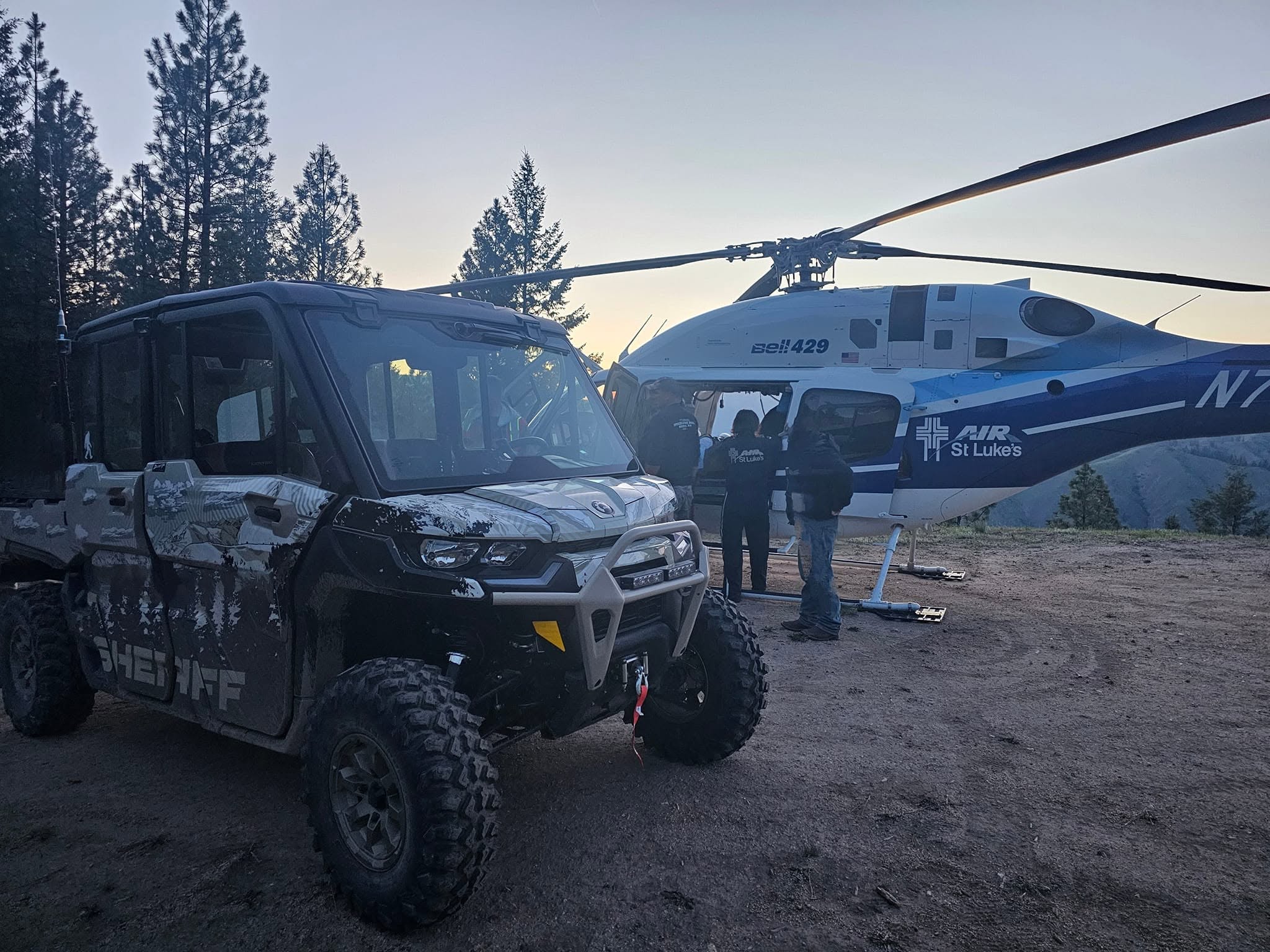
What We Ask
Basic requirements
Be at least 18 years old
You must be able to pass a background check, since our members work alongside the Boise County Sheriff's Office.
Live within reason of the county
Callouts are time-sensitive, so members generally live in or near Boise County and can respond when available. Adjust to your team's policy.
Reasonable fitness
You should be able to hike over uneven terrain carrying a pack. You don't need to be an athlete — but the work is physical.
Time to train
We meet monthly (details below) and train regularly, plus respond to callouts when you're available.
The Process
How to become a member
- 1
Reach out
Fill out our contact form or email us to say you're interested. We'll tell you about upcoming meetings and info sessions.
- 2
Come to a meeting
We meet the 3rd Tuesday of every month at 6:30 PM at the Boise County Sheriff's Office in Idaho City. Stop by to meet members, ask questions, and see if it's a good fit — for you and for us.
- 3
Apply & screen
Pick up an application at a meeting and complete a background check through the Boise County Sheriff's Office. There are no membership dues.
- 4
Train as a probationary member
New members complete foundational training in search fundamentals, navigation, radio use, and safety before responding on missions.
- 5
Become mission-ready
Once you've met the training standards, you're cleared to respond and continue growing into specialty disciplines.
Ready to take the first step?
Tell us a little about yourself and we'll be in touch about the next meeting.